
About us
Rocky Mountain PEHSU is a regional team of health professionals with expertise in children's environmental health. We help families, healthcare professionals, communities, and public health partners understand how environmental exposures can affect children's health—and what they can do to prevent or reduce those exposures.
We provide education, clinical consultation, resources, and connections to experts across the region. Our work spans the full range of environmental health concerns, from air quality and wildfire smoke to lead, water quality, healthy homes, climate and more.
Our mission
Our mission is to protect and promote the health of children and families by preventing and reducing harmful environmental exposures, strengthening environmental health knowledge among healthcare professionals and communities, and connecting people with evidence-based information and expertise.
The six states we serve
Rocky Mountain PEHSU serves children, families, healthcare professionals, and communities across Colorado, Montana, North Dakota, South Dakota, Utah, and Wyoming.
Our region includes diverse communities, environments, and environmental health challenges—from urban air pollution and wildfire smoke to rural and agricultural exposures, drinking water concerns, extreme weather, and environmental health issues affecting Tribal and other historically underserved communities.
We work with partners throughout these six states to provide locally relevant education, resources, and expertise.


Every state in the row is served the same way. Call or write from any of them.
Our place in the national PEHSU network
Rocky Mountain PEHSU is one of 10 regional Pediatric Environmental Health Specialty Units (PEHSUs) across the United States. Together, the network connects experts in pediatrics, environmental health, toxicology, public health, and related fields to address environmental health concerns from preconception through adolescence.
Each regional PEHSU brings expertise to the environmental health issues most relevant to its communities while sharing knowledge, resources, and best practices across the national network. The PEHSU network provides community education and outreach, training for health professionals, environmental health consultation, and referrals and connections to additional resources.
The national PEHSU network is supported by the Agency for Toxic Substances and Disease Registry (ATSDR) and the U.S. Environmental Protection Agency (EPA).
Meet the team
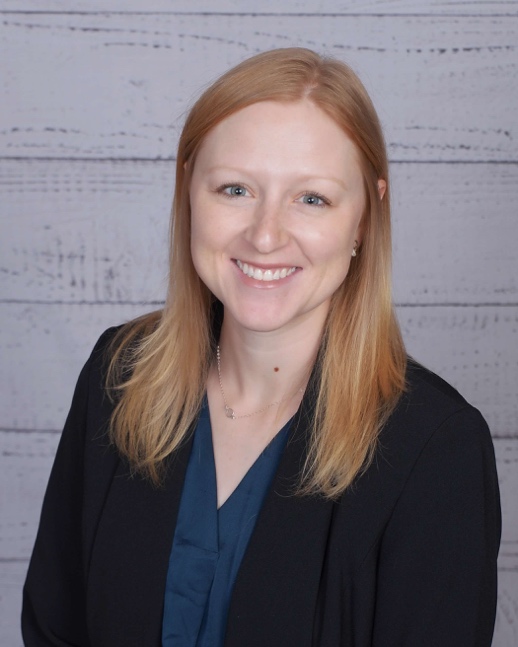
Clare Burchenal, MD, MPH, DCM, FAAP
Director
Laurie Halmo, MD
Consultant
Danae Massengill, MD
Consultant
Laura Monthathong, NP
Judy Ou, PhD
Consultant
Lynn Antony
Program Coordinator
Funding and disclaimers
What this award does and does not fund
- This award does not fund research.
- This award does not fund direct patient care. We do not provide direct clinical care.
- This information is not a substitute for talking with your child's doctor.
Funding statement
The Pediatric Environmental Health Specialty Units (PEHSU) are supported by cooperative agreement FAIN: NU61TS000356 with the Centers for Disease Control and Prevention/Agency for Toxic Substances and Disease Registry (CDC/ATSDR). The U.S. Environmental Protection Agency (EPA) also provides support through Inter-Agency Agreement 24TSS2400078 with CDC/ATSDR. The Public Health Institute supports the PEHSU as the National Program Office. The content on this presentation has not been formally disseminated by CDC/ATSDR or the EPA and should not be construed to represent any agency determination or policy. Use of trade names that may be mentioned is for identification only and does not imply endorsement by the CDC/ATSDR or EPA.
Acknowledgement
Naming a partner or a funder is not an endorsement of any product, service, or organization.